
Phoenix Area Service
AC Making Noise
If the AC is buzzing, humming, rattling, grinding, squealing, clicking, vibrating, or making a new sound, CTS can check the sound pattern and the equipment before a small noise turns into a bigger repair.
Noisy AC repair
A noisy AC may have a loose panel, failing motor, weak capacitor, bad contactor, blower issue, fan problem, compressor startup issue, debris, vibration, wiring problem, or another part under stress. The repair depends on what is making the sound and when it happens.
- Buzzing, humming, rattling, grinding, squealing, clicking, or banging
- Noisy outdoor condenser or indoor blower noise
- AC hums but does not start or fan is not spinning
- Capacitor, contactor, compressor, fan motor, and blower checks
- Phoenix-area noisy AC repair before bigger damage
Local service
CTS handles urgent AC repair, AC replacement, commercial HVAC, maintenance, water heaters, and related service across the Phoenix area.
480-696-5033
AC noise repair in Phoenix
A buzz at startup points to a different problem than a grinding blower, a rattling panel, or a compressor hum. CTS checks where the sound is coming from, whether the system is cooling, and whether the noise points to a mechanical, electrical, airflow, or startup problem.
Phoenix-area HVAC service
CTS works on residential equipment, rooftops, installs, and troubleshooting calls in Arizona conditions.
Serving Phoenix, Mesa, Chandler, Gilbert, Scottsdale, Tempe, Glendale, Surprise, Cave Creek, Queen Creek, Maricopa, and nearby communities.
Noise Changes
New AC noises should be checked before they get worse
A new AC noise usually means something changed. It may be something simple like a loose panel or debris near the fan, but it can also be a motor, blower, capacitor, contactor, compressor, bearing, or electrical problem starting to show up.
The type of sound, where it is coming from, when it happens, and whether the system is still cooling correctly all matter. A buzz at startup points somewhere different than a grinding blower, a rattling condenser panel, or a squeal from a motor under load. The sound pattern helps narrow down what needs to be checked first.


Safety First
When to turn off a noisy AC
Turn the AC off if the sound is loud, grinding, metallic, electrical, getting worse, or coming with a burning smell. Also turn it off if the outdoor unit is humming but the fan is not spinning, the breaker trips, the unit starts and stops repeatedly, or the system is no longer cooling.
Some noises can cause more damage if the system keeps running. A loose fan blade, failing motor, bad bearing, hard-starting compressor, or electrical problem can turn a small repair into a larger one. If the sound is new and concerning, shutting the system off and calling for service is the safer move.
Outdoor Electrical Noise
Buzzing or humming from the outdoor AC unit
Buzzing or humming from the outside AC unit can point to an electrical or startup problem. Common possibilities include a weak capacitor, failing contactor, compressor startup issue, condenser fan motor problem, loose wiring, or a part that is energized but not starting correctly.
If the unit hums but the fan is not spinning, shut the system off and call for service. The system may be trying to start without the motor or compressor running correctly. The capacitor, contactor, fan motor, compressor, wiring, and incoming power should be checked before assuming the cause.


Startup Clicks
Clicking sounds when the AC starts or stops
A light click when the system starts or stops can be normal. Repeated clicking, loud clicking, or clicking when the system will not start is different. That can involve the thermostat signal, contactor, relay, control board, low-voltage wiring, capacitor, or compressor startup circuit.
The diagnostic question is whether the clicking is part of normal operation or a sign that the system is trying to start and failing. If the AC clicks but does not turn on, the problem may be electrical, control-related, or connected to a failed startup component. Related pages include AC won’t turn on, capacitor replacement, and compressor not starting.
Vibration
Rattling or vibration from the AC
Rattling can come from a loose panel, loose screw, debris inside the outdoor unit, vibrating refrigerant line, fan blade issue, blower assembly problem, or equipment that is not sitting solidly. On rooftop units and package units, loose panels can also make noise when the blower or fan starts.
A small rattle should not be ignored if it is getting louder. Vibration can loosen wiring, rub copper lines, damage panels, or create wear on moving parts. Panels, fan assemblies, mounting, refrigerant lines, blower parts, and visible signs of rubbing or movement all need a look.


Moving Parts
Grinding noises from the blower or fan
Grinding usually means a moving part needs attention. It may come from a blower motor, blower wheel, condenser fan motor, fan blade, bearing, or a part rubbing where it should not. A grinding sound should be checked quickly because the part may be wearing, loose, or failing.
If the sound is coming from the indoor unit, the blower assembly, blower wheel, motor, wheel balance, mounting, and airflow path should be checked. If the sound is outside, the condenser fan motor, fan blade, top grille, motor mounts, and anything that could be contacting the moving fan should be inspected.
High-Pitched Noise
Squealing or high-pitched AC noise
A squealing or high-pitched noise can come from a motor, bearing, blower assembly, belt drive on some equipment, or a part under stress. Some residential systems do not use belts, but blower motors, condenser fan motors, and rooftop equipment can still create high-pitched sounds when parts are wearing or failing.
Where the sound comes from and when it happens matters. A squeal during startup may point to a different issue than a constant squeal while the blower is running. The repair depends on whether the sound is from the indoor blower, outdoor fan, motor bearing, belt drive, or another moving part. For belt-driven equipment, this can also overlap with commercial HVAC service.


Metal Sounds
Banging or clanking sounds
Banging or clanking is more serious than a light rattle. It can mean a fan blade, blower wheel, motor mount, compressor mount, panel, or moving part is loose or hitting something. The system should be turned off if the sound is loud or metallic.
Running the AC with a loose or striking part can damage the fan assembly, motor, coil, wiring, or cabinet. The indoor and outdoor equipment need to be checked to find what is moving, loose, bent, or out of position.
Indoor Noise
Noises from the indoor blower or duct area
Indoor AC noises may come from the blower motor, blower wheel, filter rack, return grille, ductwork, loose access panel, or air restriction. A whistling sound may point to airflow restriction. A scraping or grinding sound may point to blower wheel or motor issues. A popping or flexing sound may come from duct pressure changes.
The indoor unit, filter, return airflow, blower assembly, duct connections, access panels, and signs of vibration or rubbing should be checked. If the sound changes when the blower speed changes, that can help narrow down the cause. Related pages include blower motor problems, IAQ and ductwork, and AC maintenance.


Outdoor Noise
Noises from the outdoor condenser
Outdoor AC noises often come from the condenser fan, compressor, contactor, capacitor, panels, wiring, or debris inside the cabinet. A loud buzz, hum, rattle, scrape, or hard-start sound can point to very different problems.
The condenser fan should be checked for correct operation, the compressor should be checked for startup behavior, the electrical components should be tested, and anything loose or rubbing should be found. If the outdoor unit is noisy and your house is not cooling, the system should be checked before it causes more damage.
Startup Noise
Noisy AC startup
A noise that happens mainly when the AC starts can point to a startup problem. The system may click, buzz, hum, shake, or make a hard-start sound. Possible causes include a weak capacitor, failing contactor, compressor startup issue, loose panel, motor problem, or vibration at the outdoor unit.
Startup noises matter because the compressor and motors are under heavy load when the system first turns on. Start components, electrical readings, fan operation, compressor behavior, and mounting should be checked before deciding what needs repair. Related pages include capacitor replacement, compressor not starting, and AC short cycling.


Noise And Cooling
AC noise with poor cooling
A noisy AC that is also not cooling should be checked sooner. Buzzing with no outdoor fan, grinding from the blower, compressor humming, rattling at the condenser, or a loud startup noise can all affect cooling performance.
Both the sound and the cooling operation need to be checked. That may include airflow, blower operation, condenser fan operation, compressor startup, capacitor condition, contactor condition, coil condition, refrigerant readings, and temperature split. The check shows whether the noise is related to the cooling problem.
Hot Or Electrical Smell
Burning smell with AC noise
A burning smell with buzzing, humming, clicking, or grinding should be treated seriously. It may point to overheating electrical parts, a failing motor, damaged wiring, a bad contactor, or another component under stress.
Turn the system off if you smell burning or see damaged wiring. The electrical compartment, motors, wiring, capacitor, contactor, and control components should be checked safely. More detail is on the AC smells burning page.
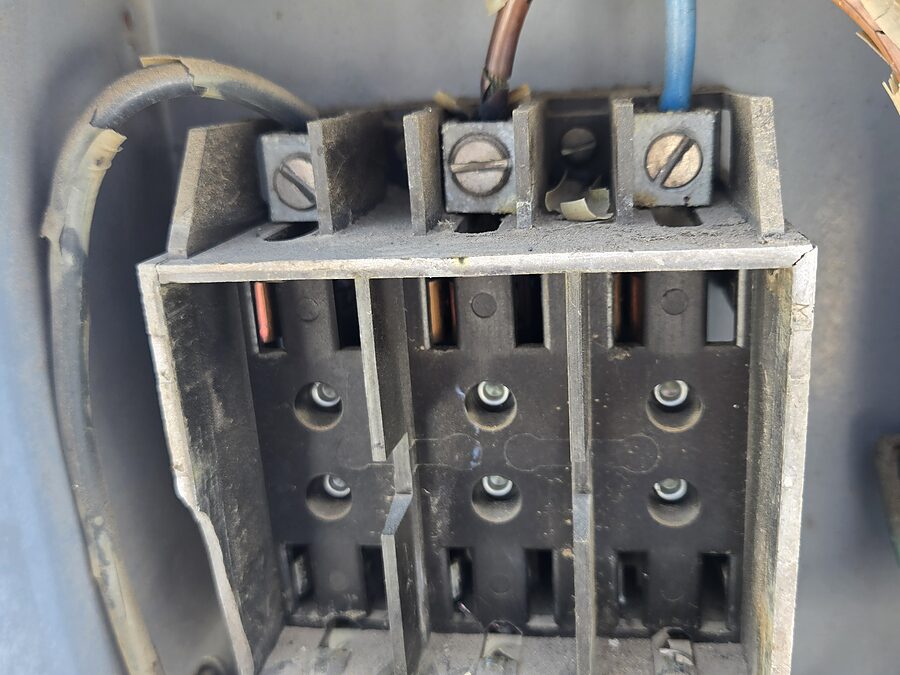
Noise Diagnostics
How CTS diagnoses a noisy AC
A noisy AC diagnostic starts with the sound itself: where it comes from, when it happens, and whether cooling has changed.
Blower and moving parts
Blower motors, blower wheels, belts on some equipment, bearings, panels, and vibration points can create indoor noise.
Outdoor fan checks
The condenser fan motor, fan blade, top grille, motor mounts, and cabinet are checked for rubbing, vibration, and wear.

Electrical startup checks
Capacitors, contactors, compressor startup, wiring, and low-voltage controls can make noise or cause hard-start symptoms.
Avoid Damage
What not to do when your AC is making noise
Do not ignore a new loud noise. Do not keep running the AC if it is grinding, banging, buzzing loudly, smelling hot, or struggling to start. Do not reach into the outdoor unit while it has power. Do not try to push the fan blade with a stick or screwdriver.
If the sound is loud, metallic, electrical, or getting worse, turn the system off and call for service. Running a noisy AC can damage the fan, motor, compressor, wiring, coil, or cabinet.


Repair Or Replace
Repair or replace when an AC is making noise?
Many AC noise problems are repairable. Loose panels, debris, weak capacitors, bad contactors, blower problems, condenser fan motors, vibration issues, and some electrical problems can often be repaired if the rest of the system is in reasonable condition.
Replacement may need to be discussed when the system is older, the compressor is failing, major parts are worn out, the unit has repeated electrical or motor failures, or the repair cost is too expensive for the age and condition of the equipment. The inspection should explain whether the noise points to repair, maintenance, or replacement.
AC making noise FAQs
Answers about repair, replacement, maintenance, and service.
Why is my AC making noise?
An AC can make noise because of loose panels, debris, fan problems, blower motor issues, condenser fan motor problems, weak capacitors, bad contactors, compressor startup issues, wiring problems, vibration, bearings, belts on some equipment, or duct airflow problems.
Should I turn off my AC if it is making noise?
Turn the AC off if the sound is loud, grinding, banging, metallic, electrical, getting worse, or comes with a burning smell. Also shut it off if the outdoor unit hums but the fan is not spinning or the breaker trips.
Why is my outside AC unit buzzing?
Buzzing from the outdoor unit may involve the capacitor, contactor, condenser fan motor, compressor startup, wiring, or incoming power. If the unit buzzes but does not start correctly, it should be checked.
Why does my AC hum but not start?
A humming AC that does not start may have a weak capacitor, stuck contactor, failed fan motor, compressor startup problem, wiring issue, or control problem. Do not keep trying to run it if the fan is not spinning.
What causes a rattling AC?
Rattling can come from loose panels, loose screws, debris inside the unit, a vibrating refrigerant line, fan blade issue, blower assembly problem, or equipment mounting issue.
What causes a grinding noise from an AC?
Grinding usually points to a moving part problem. It may involve a blower motor, blower wheel, condenser fan motor, bearing, fan blade, or another part rubbing where it should not.
Can a bad capacitor make the AC noisy?
Yes. A weak or failed capacitor can cause humming, hard-start problems, or a motor that struggles to start. Similar sounds can also come from contactors, motors, compressor issues, wiring, or loose parts.
Why does my AC make noise when it starts?
Startup noise may come from a weak capacitor, contactor, compressor startup issue, loose panel, motor problem, vibration, or mounting issue. The system should be checked if the sound is new, loud, or getting worse.
Can ductwork make AC noise?
Yes. Ductwork can make popping, whistling, rattling, or vibration sounds. Causes can include airflow restriction, duct pressure changes, loose ductwork, return-air restriction, or poor duct connections.
Can CTS fix noisy AC systems?
Yes. CTS can inspect noisy AC systems and check the blower, fan motor, condenser fan, capacitor, contactor, compressor startup, wiring, panels, vibration points, ductwork, and other parts that may be causing the noise.
Licensed Local HVAC Service
Licensed, Bonded, and Insured
Certified Technical Services, known as CTS Air Conditioning, is a local, veteran-owned HVAC and plumbing contractor. The company is licensed, bonded, and insured and has served Phoenix area homes and businesses since 2001.
Licensed for HVAC
HVAC license: ROC 328467. Licensed residential and commercial HVAC service for repair, replacement, and installation work.
Licensed for plumbing
Plumbing license: ROC 341767. Licensed residential and commercial plumbing for water heaters, fixtures, piping, drains, and related work.
Experienced HVAC service
Hands-on HVAC repair and installation experience on homes, commercial rooftops, package units, and water heater calls.
Technical terms on this page
The links below explain common HVAC terms referenced on this page. Each definition is written to help identify the part, measurement, or system condition.
Airflow | Belt Drive | Blower Motor | Blower Wheel | Capacitor | Breaker Trip | Coil | Compressor | Condenser Fan | Condenser Fan Motor | Contactor | Control Board | Cycling | Ductwork | Filter | HVAC | Low-Voltage Wiring | Package Unit | Refrigerant | Refrigerant Lines | Relay | Return Grille | Rooftop Unit | Short Cycling | Temperature Split | Thermostat
Call CTS Air Conditioning
CTS handles AC repair, HVAC service, replacement, maintenance, water heaters, and other plumbing across the Phoenix area.
480-696-5033