
Phoenix Area Service
AC Contactor Symptoms and Testing in Phoenix
The contactor is the electrical switch that sends high voltage to the outdoor unit when the thermostat calls for cooling. A bad contactor can keep an AC from starting, make it chatter, buzz, or create hot electrical symptoms.
What an AC contactor does
The thermostat and control circuit do not directly run the compressor and condenser fan. They signal the contactor, and the contactor closes to send power to the outdoor equipment.
- Outdoor unit clicks, chatters, buzzes, or will not start
- Burned, pitted, or stuck contact points
- Low-voltage control signal or thermostat call may be missing
- Outdoor fan and compressor may not receive power correctly
- Contactor, capacitor, wiring, disconnect, fan, and compressor should be checked together
Local service
CTS handles urgent AC repair, AC replacement, commercial HVAC, maintenance, water heaters, and related service across the Phoenix area.
480-696-5033
A contactor failure can be a symptom or the problem
A contactor can fail from age, heat, pests, coil failure, low control voltage, dirty contacts, loose terminals, or electrical stress. The repair should include testing the control signal and the parts the contactor feeds.
Phoenix-area HVAC service
CTS works on residential equipment, rooftops, installs, and troubleshooting calls in Arizona conditions.
Serving Phoenix, Mesa, Chandler, Gilbert, Scottsdale, Tempe, Glendale, Surprise, Cave Creek, Queen Creek, Maricopa, and nearby communities.
Controls To Power
The contactor is the handoff between controls and high voltage
The thermostat and low-voltage control circuit do not directly power the compressor and condenser fan. They tell the contactor to close. When the contactor closes, high voltage can pass through to the outdoor unit so the compressor and condenser fan can run.
That handoff is why contactor problems can look like several different AC failures. The outdoor unit may be silent, may click, may chatter, may buzz, or may not pass power correctly even though the thermostat is calling for cooling. CTS checks both sides of the contactor: the low-voltage signal telling it to close and the high-voltage power it is supposed to pass. Related parts may include the control board, disconnect, capacitor, condenser fan motor, and compressor.


Testing First
Contactors are common failure points, but they still need testing
AC contactors fail often enough that they should be checked on no-start and electrical calls. But the symptom alone does not prove the contactor is bad. An outdoor unit that will not start can also involve the thermostat, low-voltage wiring, transformer, control board, safety switch, disconnect, capacitor, condenser fan motor, compressor, wiring, or breaker.
CTS tests the contactor and the parts around it before replacing anything. That may include checking the thermostat signal, low-voltage coil, contact points, high-voltage input and output, wire condition, terminal heat damage, capacitor condition, compressor circuit, and condenser fan circuit. The failed part needs to be identified before the repair is made.
Click No Start
Outdoor unit clicks but does not start
If the outdoor AC unit clicks but does not start, the contactor may be trying to pull in but the outdoor unit is not running correctly. That can involve a bad contactor, weak control voltage, failed capacitor, compressor startup problem, condenser fan motor issue, disconnect problem, wiring fault, or power issue.
A click is only one clue. CTS checks whether the contactor is receiving the call for cooling, whether it is closing properly, whether high voltage is passing through, and whether the fan motor or compressor is able to start once power is sent. Repeated breaker trips should also be treated as a separate warning sign.


Chattering
Contactor chattering
A chattering contactor is not normal. It usually means the contactor is not pulling in cleanly or staying closed the way it should. Possible causes include a weak low-voltage signal, failing contactor coil, loose low-voltage wiring, control board issue, thermostat problem, transformer issue, safety switch problem, or damaged contactor.
Chattering can be hard on the equipment because it may rapidly interrupt power to the outdoor unit. CTS checks the control voltage, thermostat call, low-voltage wiring, safety circuit, contactor coil, and contactor condition before deciding whether the contactor itself failed or the control signal is unstable. If a drain safety or float switch is interrupting the call, the drain line and water problem may also need attention.
Buzzing Or Humming
Buzzing or humming near the electrical compartment
Buzzing or humming near the outdoor electrical compartment can involve the contactor, capacitor, control voltage, loose wiring, transformer, compressor startup, or fan motor circuit. The sound may happen when the system is trying to start or when a part is energized but not operating correctly.
If the outdoor unit is buzzing, humming, or trying to start but not running correctly, shut it off and call for service. CTS checks whether the sound is coming from the contactor, capacitor, motor circuit, compressor circuit, or another electrical component. Related symptoms may also show up as AC noise or a no-start call.

Damaged Contacts
Burned, pitted, or stuck contact points
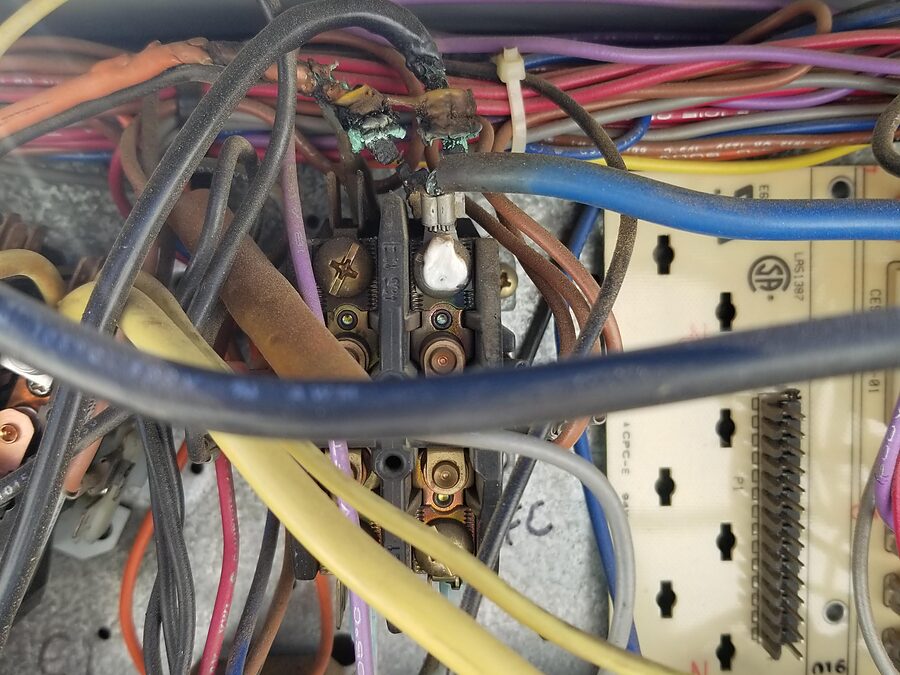
The contact points inside a contactor can wear, pit, burn, or stick over time. If the contacts are damaged, the contactor may not pass power cleanly to the outdoor unit. It may also overheat, buzz, chatter, or create a hot electrical smell.
A stuck contactor can also cause unusual operation because the outdoor unit may keep running when it should not. CTS checks the physical condition of the contactor, but also checks why the contactor overheated or stuck. Loose terminals, motor load, compressor issues, wiring damage, or electrical stress may be part of the problem.
Low Voltage
Low-voltage control problems can look like a bad contactor
A contactor only closes when the low-voltage control circuit tells it to. If the thermostat is not calling, the control board is not sending the signal, the transformer is weak, a float switch is open, a wire is loose, or a safety circuit is interrupted, the contactor may not close while the original problem may be somewhere else in the control circuit.
That is why CTS checks the low-voltage side before replacing the contactor. CTS looks beyond whether the contactor is closed. The better question is whether the contactor is receiving the correct signal and whether it responds correctly when it does. Water-safety issues, such as an AC leaking water, can also interrupt operation.


High Voltage
High-voltage power problems can also mimic a contactor issue
The contactor may receive the correct low-voltage signal and still not run the outdoor unit if the high-voltage side has a problem. A tripped breaker, bad disconnect, blown fuse, damaged wire, loose terminal, burnt connection, or poor power feed can keep the outdoor unit from running correctly.
CTS checks incoming power and outgoing power through the contactor. That helps separate a bad contactor from a disconnect problem, breaker problem, wiring issue, or failed outdoor-unit component. If the system has a burning smell or repeated breaker trips, it should not be forced to keep running.
Capacitor Pairing
Contactors and capacitors are often checked together
The contactor sends power to the outdoor unit. The capacitor helps the condenser fan motor and compressor start or run correctly. When the outdoor unit will not start, hums, clicks, or trips a breaker, both parts may need to be checked.
A bad contactor can prevent power from reaching the motor or compressor. A bad capacitor can allow power to reach the equipment but still keep the motor or compressor from starting correctly. CTS checks both parts so the repair matches the actual failure. Related pages include capacitor replacement, fan not spinning, and compressor startup diagnostics.


Startup Problems
Contactors and compressor or fan startup problems
A contactor problem can affect the outdoor fan, compressor, or both. If the contactor does not pass power correctly, the condenser fan motor may not run, the compressor may not start, or the outdoor unit may operate intermittently.
Startup problems can also come from the fan motor, capacitor, compressor, wiring, refrigerant-side conditions, or power supply. CTS checks what the contactor is feeding and whether those components are able to run once power is available. If the outdoor unit runs poorly, the result may be AC not cooling even though the thermostat is calling.
Burning Smell
Contactor problems and burning smells
A contactor with burned terminals, pitted contacts, loose connections, or overheating wires can create a hot electrical smell. The smell may also come from the capacitor, fan motor, compressor, disconnect, control board, or damaged wiring.
If the AC smells hot, smoky, or electrical, turn it off and call for service. CTS checks the contactor and nearby wiring for heat damage, but also checks the load side of the circuit to understand why the part overheated.

Repair
Contactor replacement versus deeper electrical repair
Contactor replacement may be the right repair when the contactor is worn, burned, stuck, chattering because of internal failure, or not passing power correctly. That is a common AC electrical repair.
A deeper repair may be needed when the contactor failed because of loose wiring, low control voltage, damaged terminals, compressor startup problems, failing motor load, disconnect trouble, or another electrical issue. CTS checks whether the contactor is the main problem or only the part that showed the damage first.
Safety
Do not push in the contactor by hand
Do not push a contactor in by hand to make the AC run. That is unsafe. The contactor is tied to high-voltage equipment, and forcing it closed can energize the compressor and fan while bypassing the normal control circuit.
If the outdoor unit will not start, the reason needs to be found. It may be a contactor, thermostat signal, control board, safety switch, disconnect, capacitor, motor, compressor, or wiring problem. CTS can test the circuit safely instead of forcing the equipment to run.
Diagnostic Process
How CTS diagnoses contactor-related calls
A contactor diagnostic starts with the symptom. CTS checks whether the outdoor unit is silent, clicking, chattering, buzzing, humming, tripping the breaker, smelling hot, or not cooling.
The diagnostic may include checking thermostat call, low-voltage control signal, transformer output, safety switches, contactor coil, contact points, high-voltage input, high-voltage output, wiring condition, terminal heat damage, capacitor condition, disconnect power, condenser fan motor, compressor circuit, and breaker behavior. Testing should support the contactor replacement and catch related failures before they cause another problem.
Maintenance
Maintenance can catch worn contactors early
A contactor can show wear before it fails completely. During AC maintenance, CTS may check contactor condition, capacitor readings, wiring, terminals, disconnect condition, coil condition, outdoor-unit operation, and visible signs of heat damage.
Maintenance can catch pitted contacts, loose terminals, weak capacitors, and electrical wear before the outdoor unit quits during peak heat, especially in Phoenix heat and long cooling seasons.
What Not To Do
What not to do when you suspect a bad contactor
Do not keep forcing the AC to start if the outdoor unit is clicking, buzzing, chattering, or struggling. Do not keep resetting a breaker that trips again. Do not push in the contactor by hand. Do not reach into the electrical compartment unless you are trained to work around high-voltage equipment.
If the system smells hot, shows melted wiring, chatters rapidly, or will not start correctly, shut it off and call for service. The problem may be the contactor, but the circuit around it needs to be checked too.
Electrical Safety
Do not reach into a powered AC electrical compartment
Contactors switch high voltage. Turn the system off and call for service if you see burning, melted wiring, chattering, buzzing, repeated breaker trips, or an outdoor unit that is trying to start but will not run correctly.
Common Calls
Contactor problems often show up as no-start calls
You usually notice the symptom before the part name.
Outdoor unit silent
The thermostat may call, but the outdoor unit does not start because the contactor, control circuit, disconnect, or electrical circuit is not working correctly.
Buzzing or chattering
Chattering can point to contactor coil trouble, low voltage, loose wiring, thermostat problems, or control issues.
Burning smell
Heat-damaged contacts or wiring can smell electrical and should be checked before the unit is run again.
Contactor Photos
AC contactor and wiring examples
Electrical parts need more than a quick look, but photos help show where the failure can happen.
Replacement contactor
A replacement contactor must match the equipment requirements and wiring layout.
Burned contactor contacts
Worn contacts can prevent clean power transfer and may create buzzing, heat, or no-start symptoms.
Contactor and capacitor together
No-start calls often need the contactor, capacitor, wiring, fan motor, and compressor circuit checked together.
Low-voltage control wiring
A contactor needs a correct low-voltage signal before it can close.
Heat-damaged terminals
Heat damage may point to loose terminals, electrical stress, motor load, or another deeper problem.
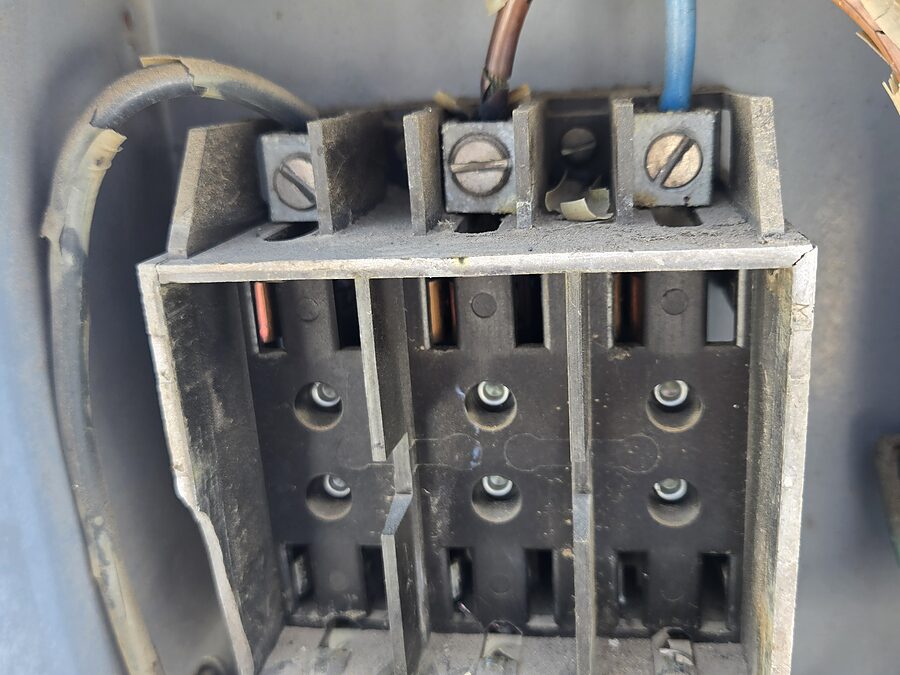
Outdoor disconnect and electrical circuit
The contactor is only one part of the electrical circuit. The breaker, disconnect, wiring, and outdoor components also matter.
Related AC Repairs
Related contactor and electrical pages
These pages cover symptoms and parts that commonly involve contactors and outdoor electrical diagnostics.
AC will not turn on
No-start calls often include contactor and control-circuit testing.
HVAC capacitors
Capacitors and contactors are often checked together during outdoor no-start calls.
Condenser fan motors
The contactor feeds the fan circuit, but the motor and capacitor still need to be checked.
Compressors
Compressor startup problems can look like contactor or capacitor trouble until tested.
Breaker trips
Repeated breaker trips can involve contactors, motors, compressors, disconnects, or wiring.
HVAC contactor FAQs
Answers about repair, replacement, maintenance, and service.
What does an AC contactor do?
An AC contactor closes an electrical circuit so high voltage can run the outdoor condenser fan and compressor when the thermostat calls for cooling.
What are signs of a bad AC contactor?
Possible signs include outdoor unit not starting, clicking, chattering, buzzing, humming, stuck contacts, burned contacts, pitted contacts, melted wiring, breaker trips, or a hot electrical smell.
Can a bad contactor keep the outside AC unit from turning on?
Yes. If the contactor does not close or does not pass power correctly, the outdoor unit may stay off even when the indoor blower runs.
Why is my contactor chattering?
Chattering may involve a bad contactor coil, weak low-voltage signal, loose wiring, thermostat issue, control board issue, transformer problem, safety switch, or unstable control circuit.
Can a contactor make a buzzing sound?
Yes. A contactor can buzz or hum if it is failing, receiving poor control voltage, has loose parts, or is part of a larger electrical issue. Other nearby electrical components can also buzz.
Can a contactor cause a burning smell?
Yes. Burned contacts, loose terminals, overheated wiring, or damaged connections at the contactor can create a hot electrical smell. The system should be shut off and checked.
Should the capacitor be checked with the contactor?
Yes. Contactors and capacitors are often checked together during no-start, humming, fan-not-spinning, compressor-startup, and breaker-trip calls.
Can a thermostat problem look like a bad contactor?
Yes. If the thermostat or control circuit is not sending the correct signal, the contactor may not close while the original problem may be somewhere else in the control circuit.
Can I push the contactor in by hand to start the AC?
No. Do not push in a contactor by hand. It is unsafe and can energize high-voltage equipment while bypassing the normal control circuit.
Does a bad contactor mean I need a new AC system?
Not by itself. A contactor is often repairable. Replacement may only come up if the equipment is older, has repeated electrical failures, compressor problems, or other major issues.
Can maintenance catch a bad contactor early?
Maintenance can catch pitted contacts, weak contactor operation, loose terminals, heat damage, weak capacitors, or wiring problems before the outdoor unit quits.
What should I tell CTS when calling about a possible contactor problem?
Mention whether the outdoor unit is silent, clicking, chattering, buzzing, humming, tripping a breaker, smelling hot, or not cooling. Also mention whether the indoor blower runs and whether the thermostat appears to be calling for cooling.
Licensed Local HVAC Service
Licensed, Bonded, and Insured
Certified Technical Services, known as CTS Air Conditioning, is a local, veteran-owned HVAC and plumbing contractor. The company is licensed, bonded, and insured and has served Phoenix area homes and businesses since 2001.
Licensed for HVAC
HVAC license: ROC 328467. Licensed residential and commercial HVAC service for repair, replacement, and installation work.
Licensed for plumbing
Plumbing license: ROC 341767. Licensed residential and commercial plumbing for water heaters, fixtures, piping, drains, and related work.
Experienced HVAC service
Hands-on HVAC repair and installation experience on homes, commercial rooftops, package units, and water heater calls.
Technical terms on this page
The links below explain common HVAC terms referenced on this page. Each definition is written to help identify the part, measurement, or system condition.
Capacitor | Breaker Trip | Coil | Compressor | Condenser Fan | Condenser Fan Motor | Contactor | Control Board | Disconnect | Float Switch | Fuse | HVAC | Low-Voltage Wiring | Refrigerant | Safety Switch | Thermostat | Transformer
Call CTS Air Conditioning
CTS handles AC repair, HVAC service, replacement, maintenance, water heaters, and other plumbing across the Phoenix area.
480-696-5033