
Phoenix AC Safety
AC Smells Burning
If your AC smells burning in Phoenix, smells hot, electrical, smoky, or like burning plastic, turn it off and call for service. CTS checks motors, capacitors, contactors, wiring, breakers, blower components, and outdoor-unit electrical issues.

Safety First
Turn the AC off if the smell is strong or electrical
If the AC smells hot, electrical, smoky, or like burning plastic, turn the system off and call for service. A burning smell can involve overheated wiring, a failing motor, a bad contactor, a weak capacitor, a breaker issue, or another electrical problem.
Do not keep cycling the thermostat on and off to see if the smell goes away. If the smell is strong, if you see smoke, if the breaker trips, or if the outdoor unit is buzzing or humming, leave the system off until it is checked. The inspection needs to find whether the smell is coming from the indoor unit, outdoor unit, wiring, controls, blower, or another component.
Smell Location
Where is the burning smell coming from?
The location of the smell helps narrow down the problem. A burning smell from the vents may point toward the indoor blower, air handler, filter area, ductwork, or something being pulled through the return. A smell near the outdoor unit may point toward the condenser fan motor, compressor, capacitor, contactor, wiring, or disconnect.
A smell near a breaker panel, disconnect, or electrical compartment should be treated seriously. We check where the smell is strongest and whether it happens during startup, while the system is running, or when the AC shuts off. That helps separate a light dust smell from electrical, motor, blower, or equipment problems.


Dust Or Electrical
Burning dust smell vs electrical burning smell
A light dusty smell can sometimes happen when heating equipment is used after sitting for a while. That needs a different response than a strong electrical smell from AC equipment, a smoky smell, a burning plastic smell, or a hot wiring smell. AC cooling equipment should not smell like it is burning during normal operation.
If the smell is light and disappears quickly, it may be less urgent. If the smell continues, gets stronger, comes with buzzing, causes a breaker trip, or seems electrical, the system should be turned off and checked. The safer move is to inspect the equipment before it is restarted repeatedly.
Burning Smell Sources
Possible AC burning smell causes
A burning-smell call needs a safety-first diagnostic before anyone assumes the failed part.
Electrical components
Contactors, capacitors, wiring, terminals, disconnects, controls, and breakers can create hot electrical smells when failing.
Motors and airflow
Blower motors, condenser fan motors, dirty filters, dirty wheels, and restricted airflow can make parts run hotter than they should.
Startup problems
A system that buzzes, hums, clicks, or struggles to start may have a capacitor, contactor, fan motor, compressor, or wiring issue.
Indoor Blower
Burning smell from the indoor blower
A burning smell from the indoor unit can come from the blower motor, blower wheel, wiring, capacitor, control board, relay, dirty filter, or restricted airflow. If the blower motor is overheating or struggling under load, the smell may show up when the system starts or after it has been running.
We check the blower assembly, motor operation, airflow, filter condition, wiring, capacitor, and control components. A blower problem can also cause weak cooling, frozen coils, shutdowns, or poor airflow. Related checks may include evaporator coil cleaning and the blower motor page.


Outdoor Unit
Burning smell from the outdoor AC unit
A burning smell from the outdoor AC unit can involve the condenser fan motor, compressor, capacitor, contactor, wiring, disconnect, or overheated electrical terminals. The outdoor unit may also buzz, hum, click, or try to start and fail.
If the outdoor unit smells hot or electrical, shut the system off and call for service. We check the condenser electrical compartment, fan motor, compressor operation, capacitor, contactor, disconnect, wiring, and signs of overheating before the unit is restarted. Related pages include AC won’t turn on, fan not spinning, compressor not starting, and capacitor replacement.
Electrical Noise
Burning smell with buzzing, humming, or clicking
A burning smell with buzzing, humming, or repeated clicking can point to an electrical or startup problem. A weak capacitor, failing contactor, loose wire, overheating motor, compressor startup issue, or control problem can create heat and odor while the system is trying to run.
Do not keep forcing the AC to start if it smells hot and makes electrical noises. Repeated startup attempts can make the problem worse. The startup circuit, capacitor, contactor, wiring, fan motor, and compressor behavior should be checked so the repair is based on what is actually failing. This overlaps with AC making noise, AC won’t turn on, compressor not starting, and fan not spinning diagnostics.


Breaker Trips
Burning smell with breaker trips
If the AC smells hot and the breaker trips, leave the system off. A breaker is a safety device. It may be reacting to a short, failed motor, compressor issue, loose connection, overheated wire, bad capacitor, bad contactor, or another electrical fault.
Resetting the breaker over and over is a bad idea. It can create more risk and may damage equipment. The breaker, disconnect, wiring, motors, compressor, capacitor, contactor, and other electrical parts need to be checked to determine why the system is tripping power. More detail is on the AC breaker keeps tripping page.
Burning Plastic
Burning plastic or melted-wire smell
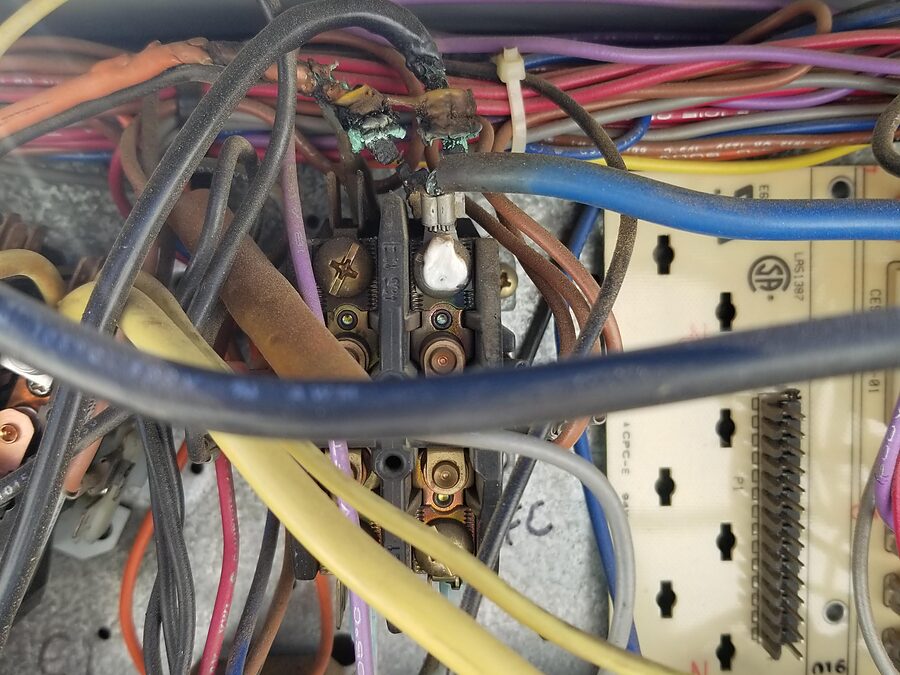
An AC that smells like burning plastic may have overheated wire insulation, melted connectors, a failing electrical component, a hot motor, or a damaged control part. This kind of smell should be treated as an electrical warning, especially if it happens while the system is starting or running.
We look for visible heat damage, loose terminals, discolored wiring, burnt contactors, weak capacitors, failed motors, and damaged electrical connections. The system should not be kept running until the source of the smell is found.


Motor Heat
Motor overheating and airflow problems
Motors can overheat when they are failing, overloaded, dirty, or running against restricted airflow. A dirty filter, dirty blower wheel, blocked return, dirty coil, weak capacitor, or failing motor can make the system work harder than it should.
A hot motor smell may not be the only symptom. The AC may also have weak airflow, poor cooling, short cycling, humming, or breaker trips. We check both the electrical side and the airflow side before deciding what needs repair. Related pages include blower motor, AC not cooling, and AC maintenance.
Debris
Debris or material near hot parts
Sometimes a burning smell comes from debris, insulation, plastic, leaves, or other material touching a hot or moving part. That can happen inside an outdoor unit, near a blower compartment, around electrical components, or inside equipment that has not been cleaned or inspected recently.
The inspection checks for debris, rubbing parts, loose insulation, damaged wire insulation, and anything that should not be near the blower, fan, motor, control compartment, or heat-producing components.

Diagnostics
How CTS diagnoses an AC burning smell
A burning-smell diagnostic starts with safety. We check where the smell is coming from, when it happens, whether the system is cooling, whether the breaker has tripped, whether there is buzzing or humming, and whether any electrical parts show signs of heat damage.
Depending on the symptoms, the check may include the thermostat signal, breaker, disconnect, wiring, terminals, capacitor, contactor, control board, blower motor, condenser fan motor, compressor, fan operation, airflow, filter condition, and visible signs of melting, arcing, rubbing, or overheating. The source of the smell should be found before the system is restarted repeatedly.
Diagnostic Photos
Electrical, motor, and airflow checks
A burning smell from AC equipment can involve more than one part, so the diagnostic needs to look at the symptoms and the equipment together.

Electrical compartment
Wiring, terminals, controls, disconnects, and heat marks are checked before the system is restarted.

Startup components
Capacitors, contactors, motor startup, compressor behavior, and current draw can all matter.
Blower and airflow
Filters, blower wheels, motors, returns, and airflow restrictions are checked when the smell seems indoor.
Do Not Force It
What not to do when your AC smells burning
Do not keep running the AC if the smell is strong, electrical, smoky, or like burning plastic. Do not keep resetting a breaker. Do not open an electrical compartment unless you are qualified to work around live equipment. Do not push a contactor in by hand. Do not ignore buzzing, humming, clicking, or a fan that is not spinning.
Turn the system off if it is safe to do so and call for service. A burning smell can be minor, but it can also be a warning sign before a larger electrical or motor failure.


Repair Or Replace
Repair or replace when the AC smells burning?
Many burning-smell problems are repairable. A bad capacitor, failing contactor, loose wire, overheated terminal, blower motor issue, condenser fan motor issue, or damaged control part may be repairable if the rest of the system is in reasonable condition.
Replacement may need to be discussed when the system is older, has repeated electrical failures, has compressor problems, has heat-damaged wiring throughout the equipment, or needs a major repair that is too expensive for the age and condition of the unit. The inspection should explain whether the smell points to repair, maintenance, or replacement.
Related Diagnostics
Supporting AC repair pages
Use these pages when the burning smell comes with a specific symptom such as noise, breaker trips, poor cooling, or a startup failure.
Startup problems
Outdoor unit buzzes, hums, clicks, or will not start correctly.
AC burning smell FAQs
Answers about repair, replacement, maintenance, and service.
Why does my AC smell like burning?
An AC can smell like burning because of overheated wiring, a bad capacitor, failing contactor, loose electrical connection, blower motor problem, condenser fan motor problem, compressor startup issue, dirty filter, restricted airflow, debris, or a damaged control component.
Should I turn off my AC if it smells burning?
Yes. If the smell is strong, electrical, smoky, or like burning plastic, turn the AC off and call for service. Leave it off if the breaker trips, the unit buzzes, or you see smoke or visible damage.
Is a burning smell from the AC dangerous?
It can be. Some smells are minor, but electrical smells, burning plastic smells, smoke, buzzing, breaker trips, or hot wiring odors should be treated as urgent HVAC safety concerns.
Why does my AC smell like burning plastic?
A burning plastic smell may come from overheated wire insulation, melted connectors, a failing motor, a hot electrical component, a bad contactor, a weak capacitor, or damaged control wiring. The system should be inspected before it is run again.
Can a dirty filter cause a burning smell?
A dirty filter can restrict airflow and make the blower work harder. That can contribute to overheating, weak airflow, frozen coils, poor cooling, and abnormal smells. Other causes should still be checked too.
Why does my outdoor AC unit smell hot?
A hot smell near the outdoor unit may involve the condenser fan motor, compressor, capacitor, contactor, wiring, disconnect, or overheated terminals. Shut the system off if the smell is electrical, smoky, or paired with buzzing or humming.
Why does my AC smell burning and trip the breaker?
A burning smell with a tripped breaker may involve a short, failed motor, compressor issue, overheated wiring, loose connection, weak capacitor, bad contactor, or another electrical fault. Do not keep resetting the breaker.
Can a blower motor cause a burning smell?
Yes. A blower motor can overheat or fail under load. Blower wiring, capacitors, controls, dirty filters, restricted airflow, and blower-wheel problems can also contribute to hot or burning smells from the indoor unit.
Why does my AC smell burning when it starts?
A burning smell at startup may involve a capacitor, contactor, motor, compressor startup issue, wiring, or debris near a hot part. If the smell continues or comes with buzzing, clicking, or a breaker trip, the system should be checked.
Can CTS repair an AC that smells burning?
Yes. CTS can inspect the indoor and outdoor equipment, check electrical components, motors, wiring, capacitors, contactors, controls, airflow, and visible signs of overheating to find the source of the burning smell.
Licensed Local HVAC Service
Licensed, Bonded, and Insured
Certified Technical Services, known as CTS Air Conditioning, is a local, veteran-owned HVAC and plumbing contractor. The company is licensed, bonded, and insured and has served Phoenix area homes and businesses since 2001.
Licensed for HVAC
HVAC license: ROC 328467. Licensed residential and commercial HVAC service for repair, replacement, and installation work.
Licensed for plumbing
Plumbing license: ROC 341767. Licensed residential and commercial plumbing for water heaters, fixtures, piping, drains, and related work.
Experienced HVAC service
Hands-on HVAC repair and installation experience on homes, commercial rooftops, package units, and water heater calls.
Technical terms on this page
The links below explain common HVAC terms referenced on this page. Each definition is written to help identify the part, measurement, or system condition.
Airflow | Air Handler | Blower Motor | Blower Wheel | Capacitor | Breaker Trip | Coil | Compressor | Condenser Fan | Condenser Fan Motor | Contactor | Control Board | Cycling | Disconnect | Ductwork | Evaporator Coil | Filter | Frozen Coil | HVAC | Relay | Short Cycling | Thermostat
Call CTS Air Conditioning
CTS handles AC repair, HVAC service, replacement, maintenance, water heaters, and other plumbing across the Phoenix area.
480-696-5033